
How the EOD Trailing Drawdown Works
The End-of-Day (EOD) trailing drawdown is one of the most common reasons accounts fail.
To simplify the process, the drawdown for test accounts is calculated only at the end of the trading day, not during open trades.
Your EOD trailing drawdown amount is listed in the account table.
Futures
| Futures Account Size | Maximum Position Size | Profit Target | Maximum Trailing Drawdown |
| $25,000 | 3 Contracts | $1,500 | $1,500 |
| $50,000 | 6 Contracts | $3,000 | $2,000 |
| $75,000 | 9 Contracts | $4,500 | $2,500 |
| $100,000 | 12 Contracts | $6,000 | $3,000 |
| $150,000 | 15 Contracts | $9,000 | $4,500 |
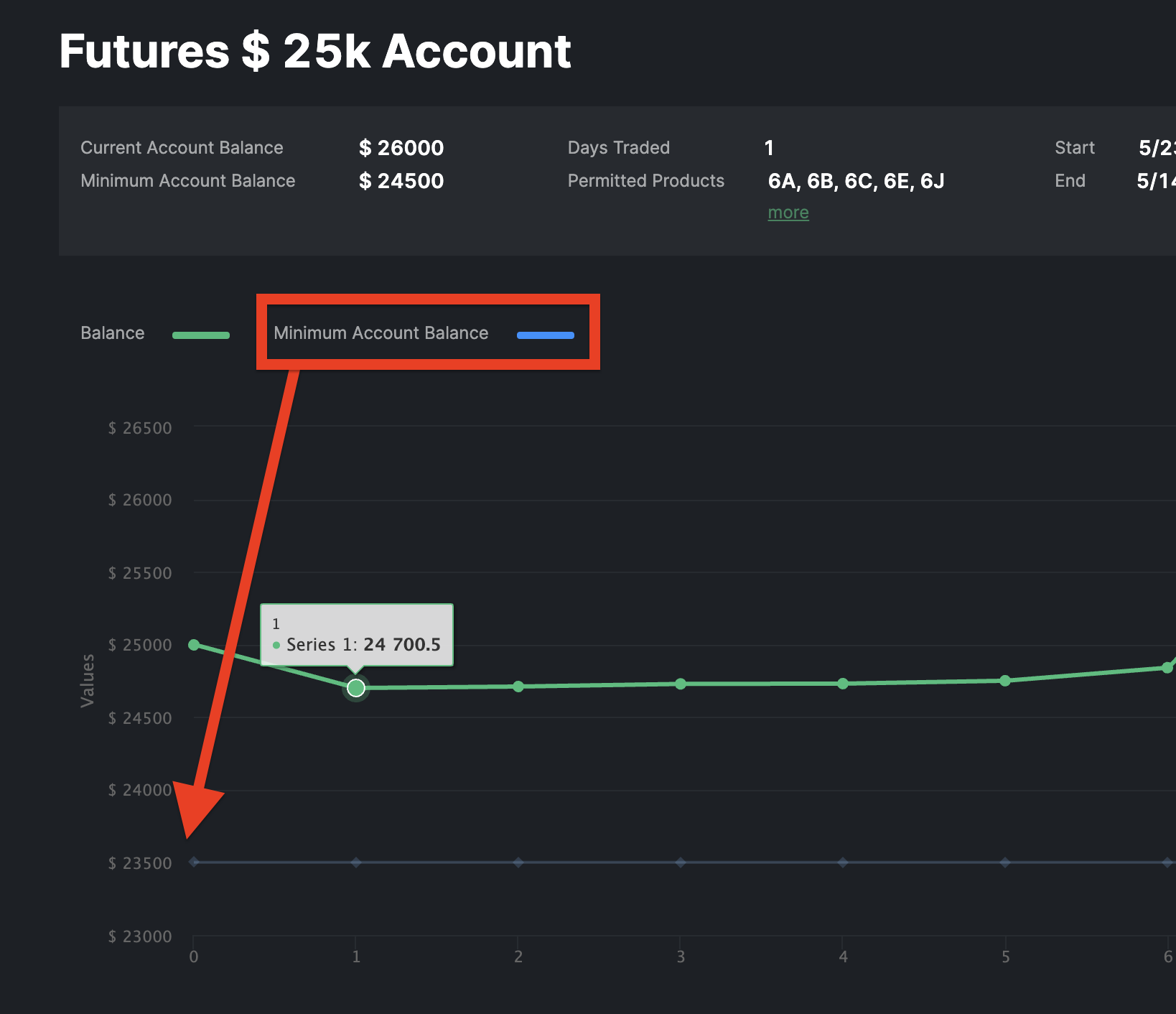
In your dashboard (Control Center), this value appears as Minimum Account Balance.
Example
For a 25,000 account:
The trailing drawdown is 1,500.
The minimum account balance starts at 23,500 (25,000 − 1,500).
The drawdown is called “trailing” because the minimum account balance follows your highest end-of-day balance upward.
Example movement:
If you earn 1,000 on Day 1, your end-of-day balance becomes 26,000.
The minimum account balance moves to 24,500 (still 1,500 behind the highest EOD balance).
This continues until the minimum account balance reaches the original starting balance of 25,000.
Once it reaches that point, it stops trailing and remains fixed.

When an Account Fails
If your account drops to the Minimum Account Balance at any time — through realized or unrealized losses — the account is immediately liquidated.